ORIGINS
A hybrid from a nursery
The Woodland Trust says an Oriental plane and an American sycamore in John Tradescant the younger's London nursery cross-pollinated. The hybrid was noticed in the mid-17th century.
The history doodleplane
A CITY TREE EXPLAINED
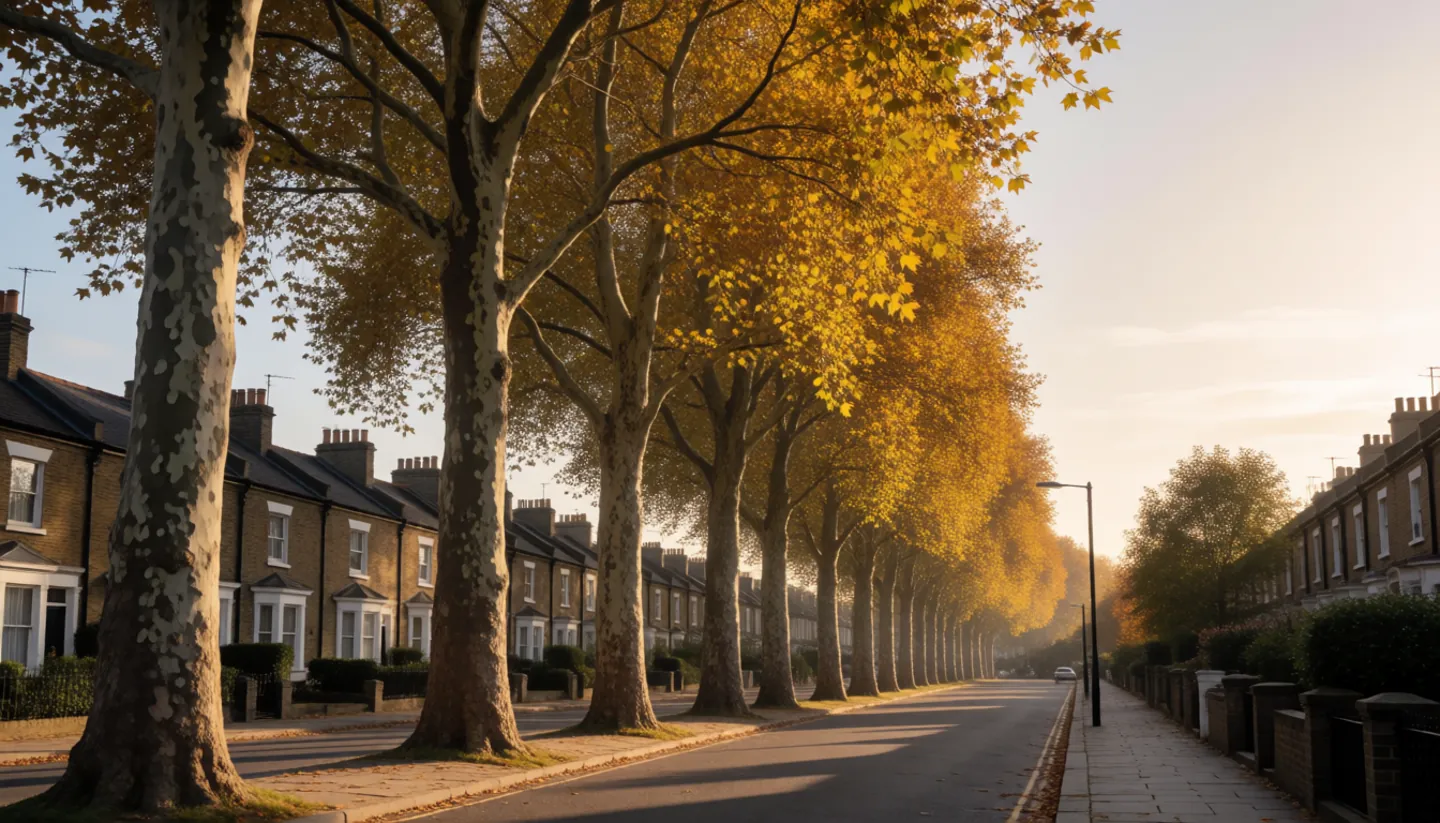
Walk along almost any London street or square and you will pass one.
The London plane is a hybrid that appeared by chance in a 17th-century garden. Its flaking bark, tough leaves and tolerance of pollution and drought made it the city's most common tree, and foresters now watch closely for the diseases that could change that.
35 METRES and several centuries
Check a plane treeTHE SHORT ANSWER
Three things to know about the London plane,
from the Woodland Trust and Forest Research.
ORIGINS
The Woodland Trust says an Oriental plane and an American sycamore in John Tradescant the younger's London nursery cross-pollinated. The hybrid was noticed in the mid-17th century.
The historyBARK
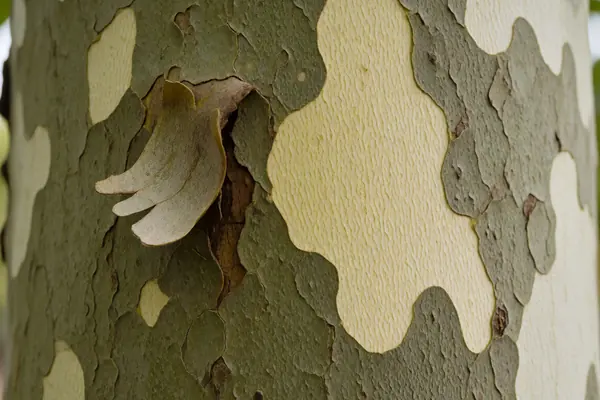
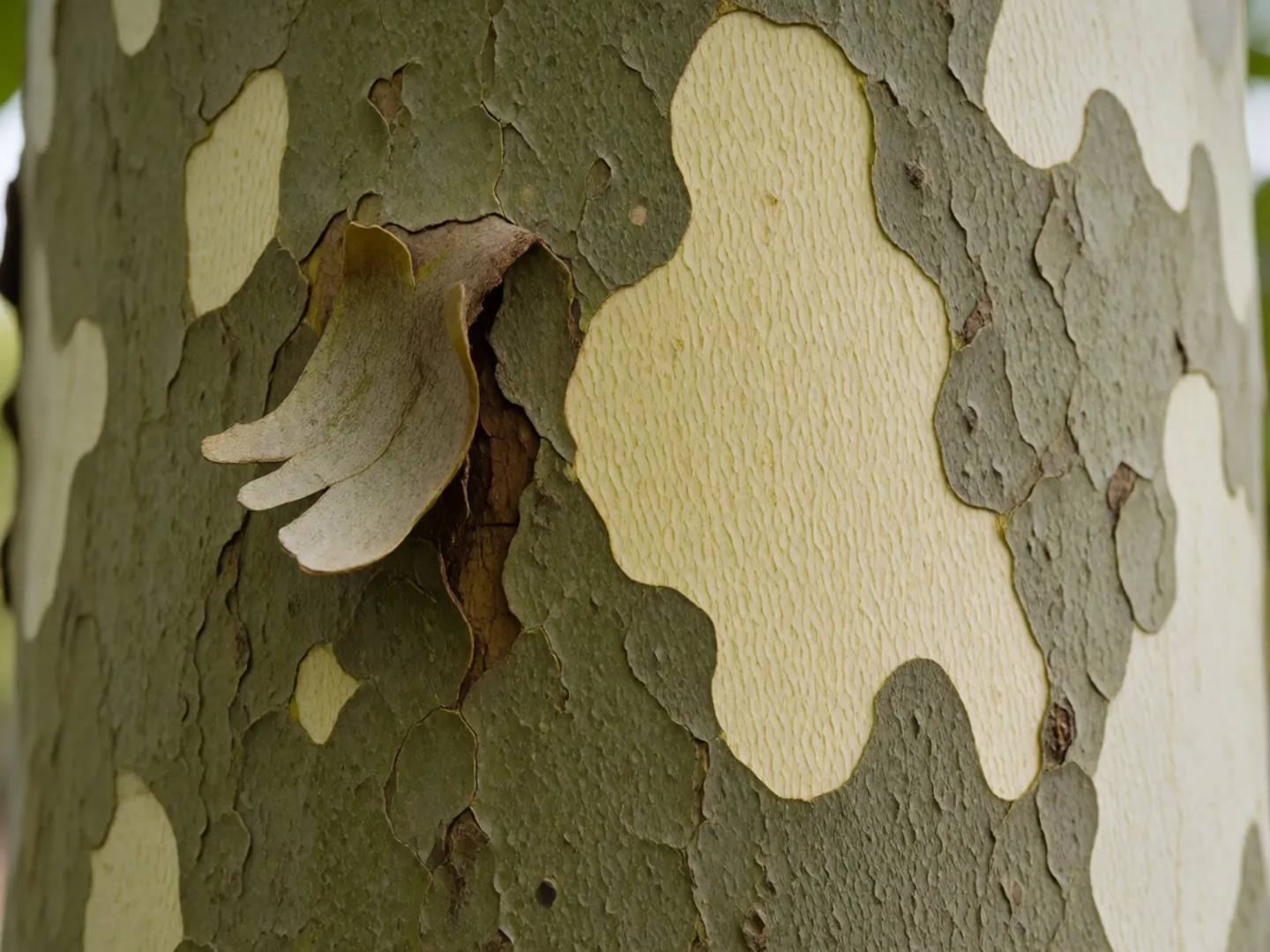
The bark breaks away in large flakes, which helps the tree cast off pollutants and gives the trunk its camouflage pattern of olive, grey and cream.
How to spot oneTHREATS
Forest Research warns that canker stain, not yet in the UK, could combine with other diseases to make planes too costly to manage. Few other trees suit their role as well.
Check a threat
HOW TO SPOT A LONDON PLANE
These identification tips come from the Woodland Trust's species guide.
A camouflage pattern of olive green, grey and cream where large scaly plates have flaked away.
Leathery and thick, with five triangular lobes, turning orange-yellow in autumn.
Spiky round fruits hang on long stems and slowly break up over winter to release seeds.
The leaves look similar, but London plane leaf edges are not serrated.
TWO NUMBERS WORTH KNOWING
One figure for how big a London plane can grow,
one for how fast its most feared disease kills.
35 m
Height a London plane can reach
The Woodland Trust says it can grow to 35 metres and live for several hundred years. The London Tree Report found planes have the largest leaf area of any species in Inner London.
SIZE · WOODLAND TRUST
2–10 years
Years until an infected tree dies
Staining can spread through the sapwood at 50 to 100 cm a year. A 2014 survey found no sign of the disease in the UK.
CANKER STAIN · FOREST RESEARCH
Forest Research notes that most UK plane trees are managed by local authorities and other public bodies, which is why the combined cost of several diseases matters.
A QUICK TREE CHECK
Pick something you might notice or hear about to see what the experts say. The bar shows how serious it is for the tree.
Based on Woodland Trust and Forest Research guidance. Canker stain is notifiable: suspected cases should be reported through Forest Research's official channels.
A CHANCE CROSS
Both parent trees had been introduced to Britain. By chance, one of each grew in the London nursery garden of the botanist John Tradescant the younger, where they cross-pollinated. He noticed the new tree in the mid-17th century, and it was named after the city where it arose.
Planting across London began in the late 18th century. The Woodland Trust says it is now the capital's most common tree, valued for adapting to urban life and resisting pollution, and its wood was once popular for golden-brown veneers.
Questions
The Woodland Trust says the bark breaks away in large flakes to dispel pollutants, which helps the tree cope with high air pollution and gives the trunk its camouflage pattern.
No. It is a hybrid of the Oriental plane and the American sycamore, both introduced to Britain, which crossed in a London nursery in the 17th century.
Up to 35 metres tall, according to the Woodland Trust, and it can live for several hundred years.
Not as far as is known. Forest Research says it is present in several European countries, including France and Italy, and that a 2014 UK survey did not find it.
No. In North America plane trees are called sycamores, but the UK sycamore is a maple, Acer pseudoplatanus. London plane leaves also lack serrated edges.
Updated
ABOUT THIS NAME
doodleplane.com is part of the DoodleSale portfolio. It isn't in an auction right now, but you can ask about leasing it.